


Dr Nikki van der Walt
MBChB, MMed (Orth), FC Orth (SA)
“The history of hand surgery is a tale of recognition of the hand as an entirely separate organ and increasing appreciation of its importance in separating humans from the rest of the living world.”
We wake up every morning and just like we expect to open our eyes and see, we expect to reach out for our coffee with a fully functional and pain free hand. Unfortunately, that very amazing organ at the end of our arm frequently becomes painful or dysfunctional.
A functional hand requires that it has a normal structure, that it is mobile, powered, sensate and comfortable. Causes of dysfunction include birth defects, injury and infection, arthritis and the degenerative effects caused by use and age.
Hand surgery has evolved as a separate specialty but incorporates skills and techniques from both plastic and orthopaedic surgery. Successful surgery relies on close liaison between surgeons and hand therapists who are an integral part of the success of our surgery.
Our primary focus as hand surgeons is to relieve pain and restore function but also where possible to improve appearance. Patients of all ages enter our practices daily and we deal with a wide variety of congenital anomalies in infancy and adulthood, trauma such as fractures and tendon injuries typically in the young adults and conditions such as arthritis, Dupuytren’s contracture and nerve impingement syndromes in the older patients.
Techniques used in hand surgery are continually evolving and improving, aiming at minimal down time for the patient and regaining the best function in the shortest time possible. Atraumatic surgery techniques are of the utmost importance in hand surgery so as not to cause unnecessary damage to the delicate structures in the hand which will invariably lead to a worse outcome. Hand therapy is aimed at rehabilitation while structures are still healing through protection and very controlled mobilization as to allow healing but prevent stiffness. If these principles are not strictly adhered to the results will frequently be substandard.
Common procedures done for hand surgery at day hospitals
Most hand surgery cases can be done at day hospitals and many times using regional anaesthesia. Wrist and hand fractures can all receive pain blocks for post-op analgesia and after a short recovery period be discharged.
This is also true for most congenital hand surgeries as well as nerve releases and most arthritis procedures. Almost all the joints of the fingers can now be replaced successfully leading to relief of pain and preservation of function. This is usually done for patients with degenerative osteoarthritis but also for patients suffering from auto-immune and inflammatory arthritis.
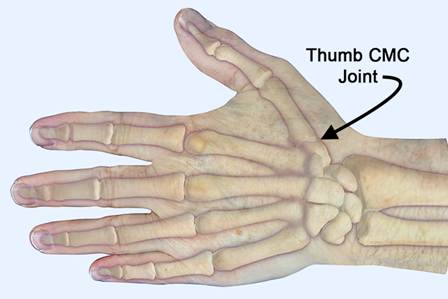
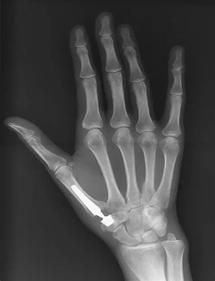
One of the most successful procedures hand surgeons have added to their range of skills in recent years has been replacement of the very painful and debilitating joint at the base of thumb (CMC-Joint) This painful condition affects up to 33% of all women by the age of 75. Not all need surgery and many can be treated conservatively, but for the patients who do not get relief of pain with continued thumb dysfunction a CMC-Joint replacement might be the answer.
CMC- joint replacement
Before
After
An interesting bit:
The WALANT (wide awake local anaesthesia no tourniquet) technique is widely practiced in South Africa for patients who cannot or choose not to have general anaesthesia for smaller procedures like trigger fingers and carpal tunnel release surgery. In these cases, the surgeon or anaesthesiologist injects local anaesthetic with adrenaline into the surgical area which will numb the specific area and lead to vasoconstriction, preventing excessive bleeding. Surgery can be done without the need to use medication, and the patient can be discharged immediately.
Hand surgery offers profound hope for patients by restoring functionality, alleviating chronic pain, and improving quality of life. It may allow patients to regain dexterity and independence.
